
|
Section |
Title |
|---|---|
|
AP10.C4.1. |
|
|
AP10.C4.2. |
|
|
AP10.C4.3. |
|
|
AP10.C4.4. |
|
|
AP10.C4.5. |
|
|
AP10.C4.6. |
|
|
AP10.C4.7. |
|
|
AP10.C4.8. |
|
|
AP10.C4.9. |
AP10.C4.1.1. Purpose. The purpose of this chapter is to provide policies to ensure cash is available to liquidate Foreign Military Sales (FMS) Trust Fund obligations, as disbursements are due. Funds appropriated by the Congress for defense purposes cannot be used to liquidate obligations resulting from the use of FMS Trust Fund contract authority, except as authorized by law. The FMS purchaser, USG appropriation made available to finance FMS Trust Fund purchases, or a third-party payer, must meet the cash requirements (outlay authority) of each FMS Trust Fund purchaser.
AP10.C4.1.2. Authoritative Guidance. The Arms Export Control Act (AECA), codified as Title 22, United States Code, Chapter 39 provides the authority and general rules for FMS and commercial sales of defense articles, services, and training. Implementation information on cash management procedures can be found in Chapter 9, “Financial Policies and Procedures.”
Executive Order (EO) 13637, “Administration of Reformed Export Controls,” delegates authority and responsibility for the administration and functions for Security Assistance (SA), from the President, to the Secretary of War (SECWAR) and the Secretary of State (SECSTATE). The authority of the SECWAR is further delegated in the DoD Directive (DoDD) 5105.65 “Defense Security Cooperation Agency (DSCA),” to the Deputy Secretary of War (DEPSECWAR), to the Under Secretary of War for Policy (USW (P)), and finally, to the DSCA Director.
AP10.C4.2.1. Defense Security Cooperation Agency. DSCA is responsible for:
AP10.C4.2.1.1. Ensuring adequate cash availability in the Foreign Military Sales (FMS) Trust Fund to meet DoW’s financial requirements;
AP10.C4.2.1.2. Identifying the specific issue and remedy should cash flow problems arise (e.g., collection of additional funds or other alternative financial arrangements, adjustments to ordered values, delivery timeframes, or ordered quantity);
AP10.C4.2.1.3. Approving Standby Letters of Credit (SBLCs), Federal Reserve Bank of New York (FRBNY) accounts, and Commercial Bank Accounts (CBAs) as they may pertain to FMS financial requirements;
AP10.C4.2.1.4. Calculating and approving, on a quarterly basis, the Termination Liability (TL) reserve amounts required to protect the USG against liability if a particular FMS-funded contract (or contract line item number (CLIN)) is terminated prior to completion;
AP10.C4.2.1.5. Performing follow-up actions on SA Program arrearages;
AP10.C4.2.1.6. Constructing standard payment schedules (to include any contract termination costs); and
AP10.C4.2.1.7. Preparing special bills for those customers with approved special billing arrangements (SBAs).
AP10.C4.2.2. Defense Finance and Accounting Service. The Defense Finance and Accounting Service (DFAS) is responsible for:
AP10.C4.2.2.1. Posting purchaser cash deposits within 2 business days of notification when the Defense Integrated Financial System (DIFS) is available. When DIFS is unavailable due to scheduled maintenance, update upon availability;
AP10.C4.2.2.2. Posting disbursements by the 20th day of the following month to FMS case accounting records;
AP10.C4.2.2.3. Reconciling summary trust fund-level account balances in DIFS with the U.S. Department of the Treasury (Treasury) balance in the Account Summary from the Governmentwide Treasury Account Symbol Adjusted Trial Balance System (GTAS);
AP10.C4.2.2.4. Assuring that approved cash expenditure authority (EA) requests do not exceed the FMS purchaser’s cash available balance in the FMS Trust Fund; and
AP10.C4.2.2.5. Working with the accounting activities, contract payment offices, and certifying officers as appropriate to:
AP10.C4.2.2.5.1. Ensure sufficient cash is available and approve EA requests above a country threshold prior to disbursing FMS funds, when requested;
AP10.C4.2.2.5.2. Facilitate resolution, or resolve all rejects of EA to lessen Prompt Payment Act (PPA) (31 U.S.C. 3901) interest payments;
AP10.C4.2.2.5.3. Resolve situations where EA was approved but returned without a disbursement; and
AP10.C4.2.2.5.4. Ensure EA is obtained prior to processing a transfer, correction of charges against, or credits to the FMS Trust Fund using Standard Form (SF) 1080, Voucher for Transfers Between Appropriations and/or Funds, or SF 1081, Voucher and Schedule of Withdrawals and Credits.
AP10.C4.2.3. Implementing Agencies. The Implementing Agencies (IAs) are responsible for:
AP10.C4.2.3.1. Providing information needed to the DSCA (Office of International Operations, Global Execution Directorate, Case Writing and Development Division (IOPS/GEX/CWD)) for payment schedule preparation at the line-level, in the Defense Security Assistance Management System (DSAMS). The IA will approve the schedule as part of the Letter of Offer and Acceptance (LOA) document coordination/signature process. Additional information on payment schedule preparation is inSection C9.9.;
AP10.C4.2.3.2. Developing progress payment schedules or historical cost curves systematically for DoW major weapon systems (used to determine payment schedule distributions for procured materiel requiring progress payments to contractors), and reviewing the schedules or curves when the acquisition strategy changes;
AP10.C4.2.3.3. Reviewing all case payment schedules, at least annually, in preparation for a formal review with the FMS purchaser, or when the case value adjusts by ten percent or more;
AP10.C4.2.3.4. Requesting and receiving EA approval prior to processing a disbursement citing the FMS Trust Fund;
AP10.C4.2.3.5. Resolving problem disbursements using the authorities found in Department of War Financial Management Regulation (DoW FMR), DoW 7000.14-R, Volume 3, Chapter 11;
AP10.C4.2.3.6. Validating obligations in accordance with the requirements found in DoW FMR, Volume 3, Chapter 8, section 3.0; and
AP10.C4.2.3.7. Performing case reviews including reviewing and reconciling general case and delivery-related data, expenditures/disbursements, and USG financial requirements.
AP10.C4.2.3.7.1. If payment schedules are inadequate to meet USG financial requirements, the IA must promptly notify the responsible DSCA (Office of Business Operations, Financial Policy & Regional Execution Directorate (OBO/FPRE)) Country Financial Director (CFD), Defense Finance and Accounting Service, Security Cooperation Accounting Directorate (DFAS-SCA), and the FMS purchaser of the additional requirements. The IA must also follow-up on this notification by issuing a revised payment schedule via an LOA modification.
AP10.C4.2.3.7.2. During the annual review of the case, if payment schedules overstate USG financial requirements due to delays in contract award, delivery slippages, or other reasons, the IA must issue a revised payment schedule via an LOA modification or amendment. The IA is responsible for ensuring that the USG does not prematurely collect customer funds.
AP10.C4.2.4. Payment Activities. Payment Activities are defined as the entities responsible for the payment of invoices either to commercial vendors or payees, or for executing intragovernmental payments or collections. Payment Activities are responsible for requesting and receiving EA approval prior to the certification to a disbursing officer of a voucher for a commercial payment, or an intragovernmental payment or payment refund, which cites the FMS Trust Fund.
AP10.C4.3.1. Cash in Advance. The Foreign Military Sales (FMS) purchaser must make cash deposits into the FMS Trust Fund, a DSCA-approved Federal Reserve Bank (FRB), or DSCA-approved Commercial Bank Account (CBA) for defense articles and services sold under Arms Export Control Act, Section 21 (22 U.S.C. 2761), AECA, Section 22 (22 U.S.C. 2762), and AECA, Section 29 (22 U.S.C. 2769) in advance of delivery, performance, or payments to contractors, except as provided in Section AP10.C4.3.1.3. and Section AP10.C4.3.1.4. Foreign Military Financing (FMF) and other USG appropriations used to finance a sale executed in the FMS Trust Fund must also make advance cash collections.
AP10.C4.3.1.1. Arms Export Control Act, Section 21 (22 U.S.C. 2761), Sales from Stocks. Payment must be made in advance, unless the President determines it to be in the national interest for payment to be made upon delivery of the article or performance of the service.
AP10.C4.3.1.2. Arms Export Control Act, Section 22 (22 U.S.C. 2762), Procurement for Cash Sales. Without charge to any appropriation or contract authorization otherwise provided, the President may enter into contracts for the procurement of defense articles, defense services, or design and construction services in U.S. dollars, to any foreign country or international organization, if such country or international organization provides the USG with a dependable undertaking:
AP10.C4.3.1.2.1. To pay the full amount of such contract that will assure the USG against any loss on the contract; and
AP10.C4.3.1.2.2. To make funds available in such amounts, and at such times, as may be required to meet the payments required by the contract and any damages and costs that may accrue from the cancellation of such contract, in advance of the time such payments, damages, or costs are due.
AP10.C4.3.1.3. Arms Export Control Act, Section 21(d) (22 U.S.C. 2761(d)) Exception. The President may determine that delayed payment is in the national interest, and allow payment to be made without interest within 60 calendar days after delivery of defense articles from stock or rendering of in-house defense. In addition, the President may extend the 60 calendar day period to 120 calendar days if the President determines an emergency exists.
AP10.C4.3.1.4. Arms Export Control Act, Section 22(b) (22 U.S.C. 2762(b)).
AP10.C4.3.1.4.1. Payment within 120 calendar days after delivery of procured defense articles or rendering of procured defense services requires the following Presidential determinations:
AP10.C4.3.1.4.1.1. It is in the national interest to issue letters of offer under this authority, and
AP10.C4.3.1.4.1.2. The emergency requirements of the purchaser for the acquisition of such defense articles and services exceed the funds available to the purchaser to make payments on a dependable undertaking basis.
AP10.C4.3.1.4.2. Both determinations in Section AP10.C4.3.1.4.1., together with a special emergency request for authorization and appropriation of additional funds to finance such purchases under the AECA, are submitted to Congress for approval.
AP10.C4.3.1.5. Initial Deposit. An initial deposit must accompany the accepted Letter of Offer and Acceptance (LOA) to provide the cash advance required to cover the outlays and/or deliveries anticipated until receipt of the first quarterly payment. Several factors affect the initial deposit. On an exception basis, DSCA may approve emergency implementation of an FMS case. The initial deposit may be deferred to a later date agreed to by both the FMS purchaser and DSCA. Refer to the Section C9.9.1.5.1. for initial deposit requirements.
AP10.C4.3.1.6. Billing. Defense Finance and Accounting Service, Security Cooperation Accounting Directorate (DFAS-SCA) prepares FMS bills on a quarterly basis. The bills include information as of the end of December, March, June, and September. Payments are due on March 15, June 15, September 15, and December 15. DSCA must approve any deviations from this schedule. The bills must include the cash requirements for the calendar quarter following the payment due date. For example, a bill prepared with December data (due March 15) is to project cash requirements through June. Thus, the deposit for an LOA accepted in January would be the cash required through June, or 6 months of advance cash requirements. See Appendix 10, Chapter 7 for a full discussion of the FMS billing process.
AP10.C4.3.2. Foreign Military Sales Trust Fund. The FMS Trust Fund is managed as a single cash entity, regardless of the source of the deposits. All FMS Trust Fund deposits are accounted for at purchaser and FMS case level by source of financing. Examples of funds include FMF (FMS Credit and FMS Credit (non-repayable)) and the Military Assistance Program (MAP) Merger. Examples of other types of funds are a purchaser’s national funds, which include third-party funds, and other DoW appropriated funds.
AP10.C4.3.3. Security Assistance and Security Cooperation Funds. The USG may provide Security Assistance (SA) or Security Cooperation (SC) funds annually to selected allied or friendly countries to finance the purchase of U.S. defense articles and services. It is, therefore, in the USG’s interest to use and manage these limited funds as effectively as possible.
AP10.C4.3.3.1. In determining the order of funds to be paid into the FMS Trust Fund, DSCA normally draws down MAP Merger funds up to the amount reserved for each case prior to using Building Partner Capacity (BPC) available FMF funds, followed by requesting the FMS purchaser to use other funds. Likewise, MAP Merger funds on deposit in the FMS Trust Fund will be expended prior to FMF funds, followed by the expenditure of the purchaser’s national funds.
AP10.C4.3.3.2. SA funds that become excess due to FMS case reduction or closure may be reapplied to other FMS cases with DSCA approval. However, FMS Credit Funds must not be refunded to the FMS purchaser unless those funds originated from loans, have been fully repaid by the FMS purchaser, and no delinquent accounts receivable exist.
AP10.C4.3.3.3. SC funds are USG appropriations made available in furtherance of the BPC efforts. These funds are deposited into the FMS Trust Fund to enable the acquisition and delivery of articles and services for this purpose. Usually, BPC funds cannot be co-mingled with SA funds on any FMS case. Until such time that BPC funds are fully decoupled from the FMS Trust Fund, strict attention should be given to ensure that the original fiscal identity of these appropriated funds are not lost, leading to fiscally improper financial transactions.
AP10.C4.3.4. Standby Letters of Credit. DSCA is authorized to approve an Standby Letters of Credit (SBLC) arrangement instead of the Termination Liability (TL) prepayment requirements described in Section AP10.C4.5.1.2. An FMS purchaser, with prior approval from DSCA, may provide DSCA with a properly executed, separate SBLC to cover uncollected TL amounts for a billing quarter. In such an event, it will be necessary to deposit into the FMS Trust Fund only the amount of funds needed to cover anticipated expenditures and disbursements during the billing cycle. Refer to Section C9.9. and/or contact DSCA (Office of Business Operations, Financial Policy & Regional Execution Directorate (OBO/FPRE)) for details on an SBLC.
AP10.C4.3.5. Federal Reserve Bank Accounts.
AP10.C4.3.5.1. DSCA is authorized to enter into a national funds investment account agreement with an FMS purchaser and the Federal Reserve Bank of New York (FRBNY) for any country that finances all or a significant part of its FMS programs with national funds. The FRBNY accounts will normally not be considered for a country that finances FMS programs primarily with SA funds.
AP10.C4.3.5.2. Upon account establishment, DSCA must compute the amount of funds to be transferred from the FMS Trust Fund to the purchaser’s FRB investment account. After the establishment of the investment account, the purchaser remits all national funds payments to the FRBNY, usually identified to specific FMS cases. Payments made from FMF (FMS Credit (non-repayable) only) funds will be made directly to the FMS Trust Fund unless otherwise specified in U.S. law and/or DSCA policy.
AP10.C4.3.5.3. DFAS-SCA is authorized by the account agreement to make periodic drawdowns, as needed (usually monthly), from the FRBNY account into the FMS Trust Fund, to ensure sufficient funds are available to make payments during the succeeding 30 calendar days.
AP10.C4.3.6. Commercial Bank Accounts. In accordance with Department of Defense Directive (DoDD) 5105.65, DSCA is authorized to enter into a national funds investment account agreement with an FMS purchaser who has a duly authorized CBA agreement with a commercial bank. This agreement allows the FMS purchaser to deposit FMS payments into a CBA and earn interest. DSCA manages the CBAs, which operate like the FRBNY accounts. However, funds originating from USG appropriations (e.g., FMF funds (repayable and non-repayable credits) or BPC cases) must not be deposited in this account, and TL amounts must not reside in the CBA. Any deviations must have Office of the Under Secretary of War (Comptroller) (OSW (C))’s Office of the Deputy Chief Financial Officer (ODCFO) written approval. The USG is not liable for any financial losses resulting from the deposits of the FMS purchaser’s funds in the account. However, funds so deposited are considered public funds within the meaning of Title 31, Code of Federal Regulations, Part 202 (31 CFR 202) “Depositaries and Financial Agents of the Federal Government.” For specific details regarding CBA agreements, refer to Section C9.11.3.
AP10.C4.3.7. Disbursements. All cash disbursements for FMS Trust Fund purchases must be identified by FMS case identifier and line, and must not exceed the cash available in the purchaser’s FMS Trust Fund account (to include MAP Merger and FMF funds). A specific case may be in a deficit cash position with the deficit being funded by the purchaser’s cash advances on other cases. The cash deposited by country “X,” however, must not be used to liquidate obligations incurred for country “Y” unless an FMS Trust Fund purchaser authorizes the use of its excess cash deposits to meet the cash requirements of another purchaser. A reportable adverse financial condition exists when a single purchaser’s FMS Trust Fund cash summary account is in a deficit position (credit balance). See Section AP10.C3.12. for more information on adverse financial conditions.
Payment schedules are a consolidated formal presentation to the Foreign Military Sales (FMS) purchaser of the estimates of cash advances needed to meet USG financial requirements. See Section AP10.C4.5. for cash requirement calculations. The Department of Defense (DD) Form 645 “FMS Billing Statement,” reflects the amounts shown on the current case payment schedule or the quarterly forecast of USG financial requirements, whichever is greater. If financial requirements or anticipated disbursements exceed the current payment schedule, or Special Billing Arrangements (SBAs) have been negotiated, the billing statement, not the payment schedule, contains the required payment amount. The Implementing Agency (IA) must continually monitor USG financial requirements and confirm, at least annually, that payment schedules are accurate to ensure cash is available in an FMS purchaser’s trust fund account when disbursements are needed. The DSCA (Office of Business Operations, Financial Policy and Regional Execution Directorate, Financial Analysis and Compliance Division (OBO/FPRE/FAC)) is responsible for issuing detailed guidance for payment schedule preparation. See Chapter 9 for more information on payment schedule preparation and billing requirements.
AP10.C4.4.1. Requirements. Payment schedule requirements will be included in each LOA in the format required in Section C9.9.
AP10.C4.4.2. Timing. As a standard, new sales agreements can enter the billing system at Defense Finance and Accounting Service, Security Cooperation Accounting Directorate (DFAS-SCA) through the 10th calendar day of the last month of the quarter. Therefore, if a new agreement is anticipated to be accepted by the purchaser and received by DFAS-SCA after the 10th calendar day of the last month of the quarter, the DoW Component should require an initial deposit for the first two quarters of the agreement.
AP10.C4.4.3. Initial Deposit. If an Letter of Offer and Acceptance (LOA) requires a deposit upon acceptance, the deposit must equal the FMS administrative surcharge required, plus all anticipated costs and contingencies (e.g., contract holdback and Termination Liability (TL)), until the first billing statement can be rendered and monies collected.
AP10.C4.4.4. Payment Schedule Revision. It is essential to prepare payment schedule revisions in the manner consistent with the parameters of the FMS billing cycle. Since the payment schedule is the basis for billing the FMS purchaser, there must be an audit trail between the original payment schedule and any revision(s).
AP10.C4.4.4.1. IA case managers are required to initiate payment schedule revisions when the LOA acceptance date is extended beyond the end of the billing quarter, to ensure that the purchaser has an LOA document that matches the payment schedule created in the billing system.
AP10.C4.4.4.2. The payment dates shown on the revised payment schedule must be compatible with the FMS billing cycle. The payment schedule dates are in the Table C9.T16.
AP10.C4.4.4.3. Payment schedule revisions due to an amendment (change in scope) or a modification must be in accordance with Section AP10.C4.2.3.7.
AP10.C4.5.1. Calculation of Initial Estimate of Cash Needed. Calculation of the cash advance needed to meet the USG financial requirements for a specific Foreign Military Sales (FMS) case requires dividing the costs into broad cost categories. The first category is the portion of case value under the authority of Arms Export Control Act (AECA), Section 21 (22 U.S.C. 2761), which includes sales from DoW inventories and the services of DoW personnel. The second category is the portion of case value under the authority of AECA, Section 22 (22 U.S.C. 2762), which includes procurement of hardware or contractor services for the FMS purchaser. The third category is the portion of the case under the authority of AECA, Section 29 (22 U.S.C. 2769), which involves rendering design and construction services from DoW resources.
AP10.C4.5.1.1. Initial Estimates of Cash Needed to Meet USG Financial Requirements in Support of the Arms Export Control Act, Section 21 Effort, When Dependable Undertaking is Authorized. The cash advance needed to meet USG financial requirements for the portion of the case classified as an AECA, Section 21 (22 U.S.C. 2761) sale must include the estimated earned reimbursements to be realized by DoW appropriation/fund accounts through the 3-month period after the payment due date of the billing statement issued by Defense Finance and Accounting Service, Security Cooperation Accounting Directorate (DFAS-SCA).
AP10.C4.5.1.1.1. Sales From Inventory. The drop from inventory creates the earned reimbursement, to include applicable administrative surcharges and accessorial charges. Therefore, the applicable FMS case manager will develop the estimated portion of cash needed to meet USG financial requirements based on anticipated requisition release dates.
AP10.C4.5.1.1.2. Sales of Department of War Services. Base the estimates of earned reimbursement for DoW services provided directly to the FMS purchaser, and for DoW services provided in support of an AECA, Section 22 (22 U.S.C. 2762) contract, on the estimated portion of the services that will occur in the applicable billing period. Services also include applicable administrative surcharges and accessorial charges.
AP10.C4.5.1.2. Initial Estimates of Cash Needed to Meet USG Financial Requirements in Support of the Arms Export Control Act, Section 22 and Section 29 Effort, When Dependable Undertaking is Authorized.
AP10.C4.5.1.2.1. The cash advance needed to meet USG financial requirements for the portion of a case classified as an AECA, Section 22 (22 U.S.C. 2762) or AECA, Section 29 (22 U.S.C. 2769) sale, must include estimated disbursements to contractors for contractor invoices and potential disbursements to contractors if the purchaser does not make additional cash deposits in a timely manner, or the purchaser unilaterally cancels the case. Potential disbursements to contractors include payment of contract holdbacks and termination costs that would result if the work were stopped when the cash available to pay contractor invoices is exhausted. The estimate of cash advance needed to meet USG financial requirements covers the period extending through the 3-month period after the payment due date of the FMS billing statement.
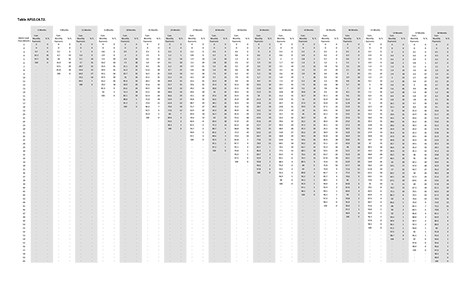
AP10.C4.5.1.2.2. Base the cash advances needed to meet USG financial requirements in support of procurements for FMS purchasers on normal administrative and procurement lead-times for the type of commodity being procured. The use of progress payment schedules from contractors, when available, is preferred over relying on default cost curves when developing Letter of Offer and Acceptance (LOA) payment schedules. Table AP10.C4.T1. and Table AP10.C4.T2. show the total cash advance needed to meet USG financial requirements for contracts in terms of percentage of contract costs. The percentages are a function of procurement lead-times. Table AP10.C4.T1. and Table AP10.C4.T2. also show the percentage of the contract value required as a reserve for potential termination costs and contract holdback in the absence of an Standby Letters of Credit (SBLC).
Table AP10.C4.T1. Cumulative Monthly Payment Schedule and Termination Liability Percentages (As a Percentage of Contract Cost) for Basic Cases Entered Before June 30, 2020
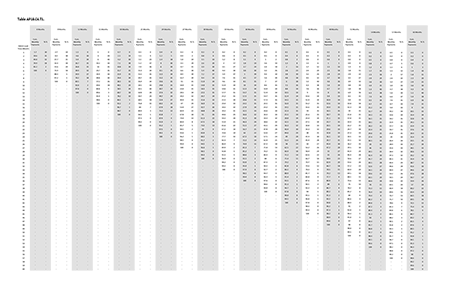
Table AP10.C4.T2. Cumulative Monthly Payment Schedule and Termination Liability Percentages (As a Percentage of Contract Cost) for Basic Cases Entered on or After June 30, 2020
AP10.C4.5.1.2.2.1. Potential termination costs represent the liability the USG has to contractors in the event termination occurs. Such costs include all accrued direct and indirect costs, as well as profits and subcontracts not covered by progress payments to the contractor, plus any penalty contract termination charges that might be realized. Potential termination costs do not include price increases to other ongoing contracts resulting from reductions in procurement quantities.
AP10.C4.5.1.2.2.2. In the absence of procurement history for a particular system, a similar system, or cost curves obtained from the prime contractor, Table AP10.C4.T1. and Table AP10.C4.T2. may be used. The Implementing Agencies (IAs) must first exhaust all other avenues for obtaining forecasting or historical data from contractors and internal sources prior to using Tables 4-1 and 4-2 as the basis for calculating expenditure and Termination Liability (TL) prepayment requirements.
AP10.C4.5.1.2.2.3. The percentages in Table AP10.C4.T1. and Table AP10.C4.T2. are for procurement lead-times ranging from 6 months to 60 months. The tables may be used for the development of payment schedules included in the LOA. The percentage figures shown in Table AP10.C4.T1. and Table AP10.C4.T2. include all applicable costs (e.g., progress payment amounts, contractor holdback, and potential TL). The amount of the cumulative monthly payment applicable to the TL/contractor holdback is shown in the second column (% TL) for each procurement lead-time.
AP10.C4.5.1.2.2.4. The TL/contractor holdback amount is a percentage of the Cumulative Amount of Contract Cost. TL/contractor holdback amounts are cumulative throughout the life of the case, and the required percentages decline toward the end of the life of the case.
AP10.C4.5.2. Administrative Surcharge Included in Initial Deposit. The initial deposit to accompany the LOA must include the FMS administrative surcharge expense and the cash advance needed to meet USG financial requirements (to include other applicable surcharges and accessorial charges) for the time between LOA acceptance and the first payment due date. The FMS administrative surcharge amount included in the deposit is determined by the total amount of the surcharge.
AP10.C4.5.2.1. For cases where the calculated administrative surcharge is $30,000 or less, the entire administrative surcharge value is recouped as part of the initial deposit. For cases that have a Small Case Management Line (SCML), the entire value of the administrative surcharge and SCML is recouped as part of the initial deposit (refer to Section C9.4.7. for more information on SCML).
AP10.C4.5.2.2. For cases where the calculated administrative surcharge is greater than $30,000, one-half of the administrative surcharge is recouped as part of the initial deposit. The remainder is proportionally recouped based on the dollar value of items or services delivered in each subsequent year.
AP10.C4.5.3. Estimate of Cash Needed to Collect Nonrecurring Cost Recoupment Charges. Nonrecurring Cost (NC) Recoupment Charges are earned when the title is passed to the FMS purchaser and should be collected within 30 calendar days of being earned. The title is normally transferred at the point of origin, at the time DoW releases the item from DoW’s inventory, or at the time the vendor ships the item. Refer to Section C7.3. for more information on title transfers.
AP10.C4.5.4. Forecasting Procedures. Alternative forecasting procedures may be used for requisition cases (i.e., Cooperative Logistics Supply Support Arrangement (CLSSA) and other repair parts cases). Most payment schedules for these cases tend to be overstated because of variations in both requisitioning and supply actions. To prevent substantial over-billing, each IA must review and update payment schedules in accordance with Section AP10.C4.2.3.7.2.
AP10.C4.6.1. Termination Liability (TL) Reserve is the amount of prepayments placed in reserve on a quarterly basis. For Foreign Military Sales (FMS) purchasers with an Federal Reserve Bank (FRB) account, the TL Reserve is maintained in their FRB account, provided sufficient funds are on deposit in the FRB to cover the TL reserved amount. Otherwise, the FMS purchaser’s Trust Fund TL Reserve Account will be utilized. The TL Reserve is not an additional charge or cost. These funds are fenced for potential termination costs; however, they do not necessarily represent the entire cost to cancel the contract. These funds cannot be used for normal disbursement activities (e.g., to pay for articles/services, administrative surcharges, or accessorial charges).
Current contracting procedures permit the procurement of both DoW and Foreign Military Sales (FMS) purchaser(s) requirements in a single contract. Allocate the amount to be billed to DoW and to each FMS purchaser to implement FMS cash flow requirements. The part of the bill applicable to an FMS purchaser can be paid only to the extent that the FMS purchaser has sufficient cash available in its FMS Trust Fund account.
AP10.C4.7.1. Contractor Allocations. Per the Defense Federal Acquisition Regulation Supplement (DFARS), Subpart 252.232-7002, “Progress Payments for Foreign Military Sales Acquisitions,” DoW contracts that include FMS requirements must require the contractor to:
AP10.C4.7.1.1. Submit a separate progress payment request for each progress payment rate;
AP10.C4.7.1.2. Submit a supporting schedule showing:
AP10.C4.7.1.2.1. The amount of each request distributed to each country’s requirements, and
AP10.C4.7.1.2.2. The total price per contract line item applicable to each separate progress payment rate;
AP10.C4.7.1.3. Identify in each progress payment request the contract requirements to which it applies (i.e., FMS or USG);
AP10.C4.7.1.4. Calculate each request on the basis of the prices, costs (including costs to complete), subcontractor progress payments, and progress payment liquidations of the contract requirements to which it applies; and
AP10.C4.7.1.5. Distribute costs among contract line items and countries in a manner acceptable to the Administrative Contracting Officer.
AP10.C4.7.2. Allocation of Payments on Contracts. Allocate progress payments in accordance with Department of War Financial Management Regulation (DoW FMR), DoW 7000.14-R, Volume 10, Chapter 10, Section 4.2. In addition, DoW contracts that include FMS requirements must identify amounts by accounting classification reference numbers (ACRNs), contract line item numbers (CLINs), and sub-line item numbers (SLINs), if applicable. This will enable the paying office to match payments to the applicable obligations.
AP10.C4.7.3. Contract Payment Offices. The contract payment offices must require that all bills submitted by contractors for payment include the proper ACRN/CLIN/SLIN. Contract payment offices must ensure they have all the documentation required to support payment (refer to DoW FMR, Volume 10, Chapter 8, Section 3.0), and that payments are applied to the proper ACRN/CLIN/SLIN.
AP10.C4.8.1. General. Department of Defense (DD) Form 645s, Special Billing Arrangements (SBAs), and Letter of Offer and Acceptance (LOA) financial instructions direct that foreign purchasers forward payments (initial deposits on basic LOAs, amounts due with LOA amendments, or official billing statement payments) by wire transfer or mailed check.
AP10.C4.8.1.1. Wire transfers are the preferred method for the foreign purchaser to forward payments.
AP10.C4.8.1.1.1. Send wire transfers to the U.S. Department of the Treasury (Treasury) Account at the Federal Reserve Bank of New York (FRBNY), using the standard Federal Reserve Funds Transfer format. The Federal Reserve System (FRS) will accept wire transfers only from banks that are members of FRS. Foreign banks must go through a U.S. correspondent bank that is a member of FRS.
AP10.C4.8.1.1.2. Defense Finance and Accounting Service, Security Cooperation Accounting Directorate (DFAS-SCA) retrieves wire transfers daily from the Treasury Financial Communications System (TFCS) and prepares collection vouchers from this data for crediting FMS purchasers.
AP10.C4.8.1.2. Make checks payable to:
U.S. Treasury and mail to Disbursing Operation (DFAS-IN/JFD)
DSSN 3801 Center Collections - SCA
8899 E. 56th Street, Indianapolis, IN 46249-6300
AP10.C4.8.1.2.1. Checks should show payment from (insert purchaser) for (insert case identifier). Any recipient of a check from an FMS purchaser is responsible for depositing the check into a Treasury account within one working day of receipt.
AP10.C4.8.2. Misrouted Payments. When a recipient other than DFAS-SCA is making a check deposit, the deposit must be processed as a courtesy deposit for DFAS-SCA. The following procedures apply:
AP10.C4.8.2.1. Prepare a deposit ticket utilizing the Over the Counter Channel (OTCnet) application. For information on OTCnet see Department of War Financial Management Regulation (DoW FMR), DoW 7000.14-R, Volume 5, Chapter 11, Section 8.1;
AP10.C4.8.2.2. Process the deposit through an Federal Reserve Bank (FRB) or supporting member bank; and
AP10.C4.8.2.3. Send a copy of the deposit ticket notification to:
DFAS-IN/JAX
ATTN: Cash Accounting
8899 East 56th Street, Indianapolis, IN 46249-6300
AP10.C4.8.2.3.1. Attach the supporting documentation received with the misrouted payment. DFAS-SCA must voucher the collection into the FMS Trust Fund on receipt of the supporting documentation.
Expenditure Authority (EA) is an Foreign Military Sales (FMS) country-level authority, which allows payments to be made against obligations previously recorded against a country’s trust fund account. EA is formal segregation of trust fund cash in the FMS Trust Fund, making the cash no longer available for any other purpose.
AP10.C4.9.1. Expenditure Authority Requirements.
AP10.C4.9.1.1. Most country trust fund disbursements require EA (including expenditure adjustments). All EA for administrative fund disbursements is accomplished by Defense Finance and Accounting Service, Security Cooperation Accounting Directorate (DFAS-SCA).
AP10.C4.9.1.2. Certifying officers engaged in FMS Trust Fund certification must verify EA was obtained. EA can be obtained by contacting DFAS-SCA, or interactively from the Defense Integrated Financial System (DIFS).
AP10.C4.9.1.3. DFAS SCA can only approve and issue EA when sufficient cash is available in an FMS purchaser’s trust fund account.
AP10.C4.9.1.4. EA must be obtained during the same calendar month in which the ensuing disbursement will be made.
AP10.C4.9.1.5. If the disbursement is not made in the same month as the EA request, the EA must be returned and reissued the subsequent month.
AP10.C4.9.1.6. Failure to request EA prior to disbursement is subject to reporting and disciplinary requirements. Administrative control of funds and Antideficiency Act violations are outlined in Department of War Financial Management Regulation (DoW FMR), DoW 7000.14-R, Volume 14.
AP10.C4.9.2. Cash Advances. A cash advance to an appropriation account must be obtained when a cash disbursement for an FMS contract would result in the applicable appropriation account being placed in a negative cash position. The amount requested must be equal to anticipated disbursing demands for a 30 calendar day period. Liquidation of outstanding advances (earning the advance through payment to contractors) must be reported to DFAS-SCA monthly. The objective is to limit the amount and length of time that outstanding advances remain against the trust fund.
AP10.C4.9.3. Cash Flow Problems. DFAS-SCA notifies the DSCA (Office of Business Operations, Financial Policy & Regional Execution Directorate (OBO/FPRE)) Country Financial Director (CFD) when sufficient, unencumbered cash is not available for DFAS-SCA to provide cash advances or EA, and contractor billings cannot be paid by the due date. The DSCA (OBO/FPRE) CFD then takes appropriate action as outlined in Section AP10.C4.2.1.2.